How Invisible Waves Have Changed the World
2025-12-04 [Petri]
Renewable energy records are currently broken around the world, as both economies of scale and political realities are turning the energy production towards the use of solar and wind.
The only voluntary laggard is the US, giving a new meaning for the “American Exceptionalism”.
Yet, even in the USA, where the leadership seems hell-bent to throw sand in the cogs of renewable energy, new record deployments are repeatedly happening, especially in the red states, of all places.
This is simply because “money talks”: when the cost of the source of the energy is zero and time to recoup your investment is only three to six years, any political fear-mongering is just habitually nodded on by the decision makers, even at the right end of the political spectrum, while quietly ignored in practice.
In Europe, the weaning off of the Russian oil and gas, which was kick-started by Putin in 2022, continues at full speed: during July, solar was the main source of electricity in the European Union for the first time in history.
OK, we do have some sunny climes like Spain, which, as I wrote earlier, has a very patchy history in terms of supporting solar in the past. But as a whole, the EU can hardly be described as the “Sun Belt”. Even Germany shows over 50% renewable generation at times.
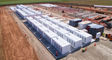
It’s not only the last-century imperialist strategy of Russia that is speeding this development. Pure financial realities are pushing it globally, often going against earlier approaches and national policies: for example Australia just approved a combined solar/battery setup of 500 MW/1 GW in Tallawang, indicating at least a correction in the policy direction in a country with huge coal deposits.
Some states in Australia have so much renewable energy that a couple of hours of consumption is going to be free for consumers. Daily.
But the elephant that barely fits in the room is China: it is seriously leading the way, by a long shot. The country, still known as the major emitter of CO2 in the world, appears to be making a new world record in some area or another every few months:
They have installed the largest wind turbine: a whopping 26 MW from a single off-shore turbine that is 185 meters tall. And even larger ones are being planned.
They have also the absolutely largest solar farm already online: 130 square kilometer, 3.5 GW plant. That output is on par with a nuclear power generator site with multiple reactors.
And they are finalizing another massive installation, with over 600 square kilometer area, with two thirds already installed at the time of writing.
As a comparison, the entire island of Ibiza is only 570 km2. Anyone who’s ever visited Ibiza can imagine the whole island + then some covered by solar panels.
China’s solar expansion just during this year has been phenomenal. In the first six months, they have installed 358 gigawatts of new solar energy production, making their overall solar generation capacity to exceed 800 gigawatts.
As a result, China’s carbon emissions have already gone down this year by 1% compared to last year, well ahead of their pretty strict, self-defined schedule.
Having visited Beijing during winter, I know how bad the air quality can be, so all this is good news not only to the world, but especially to the residents of China.
On the EV front, the Chinese new car market has already passed 55% electrification, and as anyone who’s even vaguely followed the car market knows, Chinese EVs are becoming available around the globe, with three-digit annual sales growth in almost every market they have entered.
All in all, China is electrifying its energy economy about nine times faster than any other country. While doing it, China is gaining exposure to leading-edge technologies that will make it the prime source of both hardware and expertise in this area. Catching up for the rest of the world is not impossible, but it will be hard.
The newest renewable energy growth area, just by geographical terms, is Africa. Even though part of the new African funding goes to making the grid resilient for two-way energy distribution, disconnected islands of individual grids offer freedom from waiting the costly cross-country power grid installations to reach remote locations.
This is exactly the same as what happened with the mobile communications around the turn of the century, making nationwide coverage of wired phone networks a second-tier priority.
Solar and wind are at their best when paired with local energy storage, and therefore a whopping 66 billion dollars is also projected to go battery technologies in 2025. As I wrote before, these installations replace costly gas-powered backup generators, and can step in to balance the load in a fraction of a second instead of tens of minutes.
Mass-market deployment does to the battery prices what it always does to any technology area: everything is getting cheaper by the year, hence renewables + batteries continually increase their reach.
As a stark contrast, the relentless dissing of the renewable energy segment from the current US government can be seen as almost suicidal.
As an example, Chris Wright, the United States Secretary of Energy, went on Twitter, saying:
“Even if you wrapped the entire planet in a solar panel, you would only be producing only 20% of global energy”
This is an absolutely ridiculous claim coming from someone who, by definition of his job description, should know these things: the fact that can be very easily calculated from the known amount of roughly 1 kW per square meter solar radiation, just covering 1% of the total area of the Earth by solar panels would be equal to all energy consumption on our planet. ALL of it.
Wright also just recently claimed the LNG is the “fastest growing source of energy on the planet”.
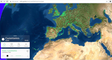
It is not even close. Solar is, as can be seen from the adjoining graph.
Adding to this misinformation are the frequent visits from the current government members to Fox News, stating the obvious of “no energy at night and when there is no wind”, totally forgetting the aforementioned advancements in grid-feeding batteries, as well as pumped hydro, heat batteries and other means that can be used to balance the load.
Finally, there’s the highly personal presidential fight against wind turbines: even multi-billion dollar projects in the Eastern states of the US that are desperately in need of expansion in energy production were halted by presidential orders, only to be currently reversed in the courts. Yet he fights on.
If these orders remain in force, billions worth of almost completed work will be lost and the resulting lawsuits will linger on for decades. And the energy gap has to be filled with something that pollutes much, much more.
The scale of the current administration’s cutbacks in the renewable energy space is staggering:
According to Bloomberg, a total 42 billion dollars worth of clean tech projects have been either canceled or delayed since Trump’s inauguration. That’s a hefty handover to the rest of the world in this business: the US is voluntarily relinquishing expertise and profits from future energy technologies to China and others.
The icing of the cake is the return of “clean coal”, at the same time when the whole continent of South America, hungry for energy to supply for its growing population, doesn’t have a single coal-fired power plants in the making. For the first time in 100 years.
Environmental advocacy group Climate Power estimates that the oil and gas industry spent $450 million to influence Trump and the Republican party during the presidential elections last year, clearly with great success.
It surely has been profitable for some individuals, but such a short term focus is now on its way of pushing the whole country even below a third-world status in terms of energy generation, exactly when the elusive but energy-hungry “AI revolution” is spiking the US energy needs.
Spain did some stupid and destructive back-and-forth with solar in the past, but has now seen the light. What the US is doing is several orders of magnitude more devastating, and there is no indication that they will see any (sun)light any time soon.
Pun intended.
Permalink: https://bhoew.com/blog/en/161
Show latest Earlier entries

Solar soars over others [WEO@IEA/CarbonBrief]
You can purchase A Brief History of Everything Wireless: How Invisible Waves Have Changed the World from Springer or from Amazon US, CA, UK, BR, DE, ES, FR, IT, AU, IN, JP. For a more complete list of verified on-line bookstores by country, please click here.
Earlier entries:
You can purchase A Brief History of Everything Wireless: How Invisible Waves Have Changed the World from Springer or from Amazon US, CA, UK, BR, DE, ES, FR, IT, AU, IN, JP. For a more complete list of verified on-line bookstores by country, please click here.
PRIVACY STATEMENT AND CONTACT INFORMATION: we don't collect anything about your visits to this website: we think that your online history belongs to you alone. However, our blog comment section is managed by Disqus. Please read their privacy statement via this link. To contact the author directly, please costruct an email address from his first name and the name of this website. All product names, logos and brands are property of their respective owners and are used on this website for identification purposes only. © 2018 Petri Launiainen.