How Invisible Waves Have Changed the World
2026-04-10 [Petri]
“Norway should refrain from starting a comprehensive process to introduce nuclear power at present, amid still plentiful hydropower supply and cheaper alternative new energy sources,” a government appointment commission said last week.
Are we seeing the end of a nuclear power era approaching with statements like this?
Looking back in history, the over-optimistic initial nuclear fission's promise of "energy too cheap to meter" has totally failed to materialize.
It actually turned out that building and running a nuclear power plant is not an easy task:
First of all, the planning phase, including finding the suitable site, getting the necessary approvals and pushing through any NIMBY (not in my backyard) resistance can take anything from five to fifteen years.
Then, getting the reactor built from the first shovel stroke to inauguration takes another eight to ten years.
So we are talking easily about 15+ years from the idea to the first produced kWh.
Unfortunately in many real cases it takes even longer, as "unexpected issues" arise: the newest Finnish Olkiluoto 3 reactor was supposed to be in use in 2009. It actually started in 2023, adding extra 14 years to the timetable. It's initial budget was also overshot by almost four times, ending up costing about €11 billion.
When the site finally is operational you need 24/7 draconian security during the lifetime of the plant, and a hefty insurance or state-level coverage in case something goes badly astray. In worst cases the costs are counted in hundreds of billions of euros: for example the cost of the grim result of the Soviet hubris-driven pointless test that blew up Chernobyl is estimated to be over €700 billion. So far.
And even at the successful end of life case, the dismantling costs are still projected to be around a billion euros.
Not to forget the tons and tons of highly radioactive byproducts that need multiple millennia of management.
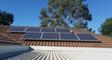
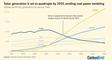
In comparison, if your timescale is set to 15 years, the price of solar panels has dropped around 80%, and the cost of wind turbines have fallen about 50%. If you look at the solar panel prices over roughly 25 years, we are talking about a 99% price reduction.
What is most striking is that the angle of the cost reduction curve has not deviated much from a linear one, and thus could continue as-is for the foreseeable future.
And in the roughly 15 years what is needed to plan and build a new nuclear plant, a renewable energy plant has already fully paid back its initial capital expenditure and is producing practically free energy for several decades more.
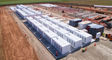
The eventual dismantling is straightforward and does not leave toxic materials behind, and the ever-cheaper battery technologies are taking care of the intermittent energy production issue.
Taking all this into account, even by admitting the fact that Norway is blessed with mountains, lots of rainfall, and thus a lot of hydropower, it should not be a surprise that the national committee came to the aforementioned conclusion.
Apart from the time and cost issues above, nuclear power plants also create a massive single point of failure. A huge portion of the national power generation will go missing in case of a shutdown, causing immediate direct and indirect issues for the grid users.
All in all, it truly should be a no-brainer comparing a nuclear alternative against distributed renewable energy generation that comes with free energy source and 30-50 year lifespans.
The global numbers also tell a grim story for existing nuclear projects: they add the same amount of new energy generation in a year as the ongoing renewable energy projects add in two days.
So the ratio between nuclear builds and renewable builds is way over 1:100.
Norway’s official decision might be the first indication of a death toll of an entire segment of the traditional energy industry.
Of course, there's the ever-lingering promise of fusion power, but it is still at least several decades away to be of any significance. And a totally different story.
At least fusion power is not promised to be "too cheap to meter".
Permalink: https://bhoew.com/blog/en/163
Show latest Earlier entries

Olkiluoto 3 came online 14 years later than expected [TVO]
You can purchase A Brief History of Everything Wireless: How Invisible Waves Have Changed the World from Springer or from Amazon US, CA, UK, BR, DE, ES, FR, IT, AU, IN, JP. For a more complete list of verified on-line bookstores by country, please click here.
Earlier entries:
You can purchase A Brief History of Everything Wireless: How Invisible Waves Have Changed the World from Springer or from Amazon US, CA, UK, BR, DE, ES, FR, IT, AU, IN, JP. For a more complete list of verified on-line bookstores by country, please click here.
PRIVACY STATEMENT AND CONTACT INFORMATION: we don't collect anything about your visits to this website: we think that your online history belongs to you alone. However, our blog comment section is managed by Disqus. Please read their privacy statement via this link. To contact the author directly, please costruct an email address from his first name and the name of this website. All product names, logos and brands are property of their respective owners and are used on this website for identification purposes only. © 2018 Petri Launiainen.